
Principle 4. Build a caring community.
Effective schools that serve truly diverse students in authentic and democratic learning must work together to build a community and provide mutual support within the classroom and school. When students engage in behaviors that are challenging, staff understand that these are expressions of underlying needs of students and seek to help students find positive ways to meet their needs. Staff make commitments to caring for and supporting such students in their school.
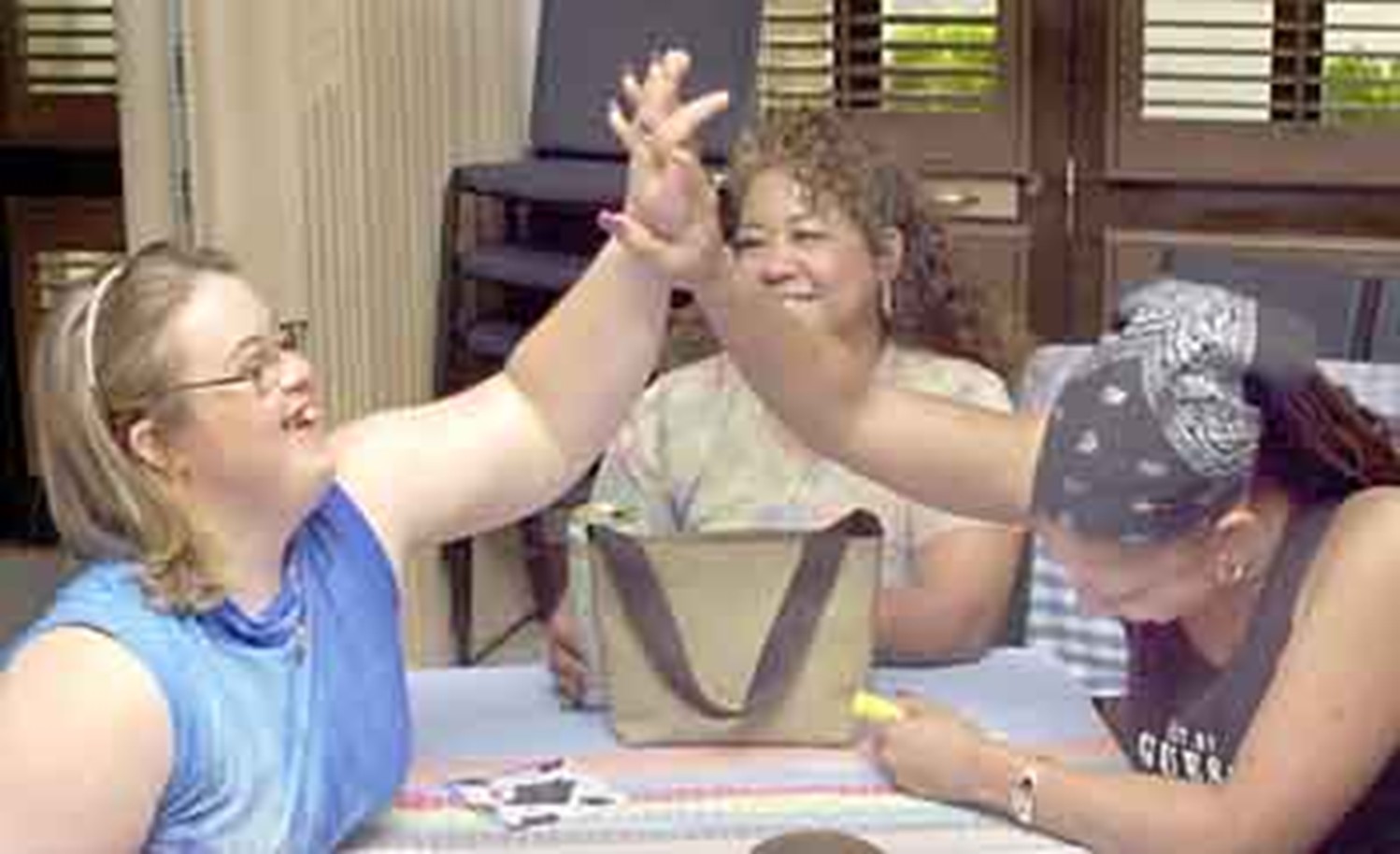
CREATING A CARING COMMUNITY:
Meeting the social and emotional needs of students to provide the critical foundation for learning.
In too many schools, in both low income urban areas and high income suburbs, schools become places of competition, social sorting and ranking. Some schools actually institutionalize such dynamics by listing test scores in rank order of all students in the school. The growth of “zero tolerance” policies, particularly in low income urban schools is contributing to this dynamic. In an effort to create safe schools, such policies are becoming methods of expressing intolerance to and lack of concern with students who demonstrate behavioral challenges. Such school cultures minimize attention to helping students learn skills to deal with internal feelings of anger and hurt and interpersonal conflict. Such settings create conditions in which the brain “down-shifts” into fight or flight, making learning difficult if not impossible.
For effective learning to occur students must experience a relaxed state of alertness. Alertness is promoted by instruction that is engaging and at the level of the learner while a relaxed state occurs when a student feels a sense of belonging in the group, caring by the teacher, acceptance by other students, and a lack of anger, tension, competition, or humiliation. Numerous concrete strategies have been documented that have shown substantial impact on a sense of community in the classroom and subsequent impacts on learning In a classroom and school that systemically builds a community of learners many behavioral problems are prevented.
Implement strategies in which students help one another. These may include:
- Peer partners where students are paired with one another. They may be responsible for helping each other in school work. At other times learning projects may be assigned a pair by the teacher. If done well, such peer partners help students learn ways of supporting one another.
- Peacemakers is a program for conflict resolution where students are taught how to engage other students in dialogue to solve situations of interpersonal conflict. Students are taught skills of active listening, identifying what needs behaviors are communicating, language where students take responsibility.
- Circles of friends can be formed around a student. Those in the circle commit to helping the individual. They often use person-centered planning to create a plan to help the student of focus reach towards their dreams.
- Teachers find many opportunities in daily lessons where students sharing about their lives and feelings in talk, writing, the arts, and more.
- Teachers conduct class meetings to plan for activities or problem-solve where students articulate their needs and feelings and work to develop problem-solving strategies.
Teachers find ways for students to articulate their needs and make choices using this as an opportunity for children to provide support to one another. Some specific strategies include:
- children going to the bathroom on their own (rather than a whole group lined up)
- students select among several classroom activities
- students may sit, stand, move around, lay on the floor, etc, as they study or work together.
School staff also work to engage proactively with other adults demonstrating behaviors for students and giving and gaining mutual support. These may include:
- Helping parents understand needs students communicate through their behavior;
- School teams that study specific issues and needs and develop implementation plans
- Team teaching between general education teachers and specialists
In schools where community building is successful the result is an atmosphere that can be seen and felt in many ways. Walking through such a school visitors are surprised at how engaged students are, how they help each other in concrete ways, the feeling of a positive emotional atmosphere.
In such a school, ‘behavior problems’ are much less frequent. Children feel cared for, have choices., do not feel constrained, and yet are intentionally taught responsibility in the process. However, many students continue to challenge teachers. Positive behavioral support strategies have been proven valuable in helping such students develop alternative means for having their needs met.
Rather than viewing children as needing to be controlled, teachers understand that all behavior communicates a message. When a child acts out, this is his or her way of telling staff about something they need. The challenge is to help figure out what that need is and to help them learn alternative strategies for meeting it. Glasser described five needs of human beings that can provide a way to understand children: (1) survival, (2) love and belonging, (3) power, (4) fun, (5) freedom. Most often, schools ignore many of these needs and actually create behavior problems in their attempt to thwart children having these needs met. The goal in an effective school is to create a school culture and specific strategies that help students meet their needs in positive ways. But what do staff DO? Here are some simple but powerful steps.
Step 1: Clarify the behavior that is a problem. It’s also helpful to figure out why the behavior is considered a problem. Are rules too rigid? Are children treated poorly so that they are responding in kind? What can be done to help meet Glasser’s Five Needs?
Step 2. Why is the behavior occurring? What need does the behavior signal? These are the questions underlying a good functional assessment. They are critical for only by answering them do we understand the child and develop a way to meet needs. Other parts of this may involve analysis of the following questions: What occurs before, during, and after the problematic behavior? What is going on in the child’s life?
Step 3. Develop strategies to meet the needs of the child in more positive ways. Develop these ideas with the child. Help the child to understand that the behavior is not good, we understand and care, but there are other ways he can get what he needs. Develop an action plan, do it, evaluate it.
Step 4. Evaluate how well the change worked. How do we know? Traditionally, we know an intervention worked if the problematic behavior went away. In this case, the strategies only worked if the needs of the child were met. Who determines this? The child.
School staff can do other things to deal with problematic behavior in a positive way. Some of these include:
- dialogue and joint planning with the parents
- create a room where the child can go, under supervision, when he ‘needs a break’ to deal with emotional stress. This can be the library, a support room, a secluded place in the class (like under the teacher’s desk)
- build social support for a specific child. Get a circle of support together of classmates who together plan with the child and teacher using person-centered planning.
- conduct a “meeting needs audit” of the total school to determine how well the school is meeting the five needs identified by Glasser for children in the building. Develop a range of activities that may address discrepancies.
Michael Peterson, 2025
RESOURCE LINKS: Principle 4. Build a caring community.
Community Building in the Classroom.
Establishing Community Agreements and Classroom Norms.
Building Community in the Classroom.
5 Strategies to Build Community in the Classroom.
Building Community Before the First Day of Middle School and Beyond.
A Supportive Classroom Environment.
Back to School: Why Creating Classroom Community is So Important.
What is Positive Behavior Support?
Behavior Intervention and Positive Behavior Support.
The Association of Positive Behavior Support. https://apbs.org
Center on Positive Behavior Support.