Whole Schooling Videos
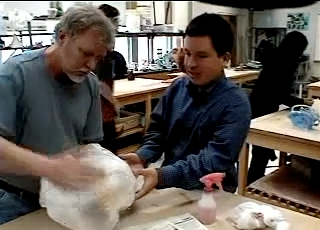
Welcome to a portion of our website where we share video clips of positive practices in school classrooms. Most of these videos were taken in association with the Whole Schooling Research Project funded by the U.S. Department of Education from 1999 to 2002.
We sent a mailing to every school district in Michigan and Wisconsin and asked for nominations of schools who felt they were trying to implement the principles of Whole Schooling as they were articulated at that time.
Please note that these video clips were not taken by professional photographers but researchers who were spending time in classrooms. The teachers in these classrooms were not perfect of course and we do not present them as such. But all the teachers we videotaped were doing their best to implement the principles of Whole Schooling.
We do hope that over time educators throughout the world will send additional photos and videos of classrooms where teachers and administrators are aiming to implement the 9 principles of Whole Schooling that we can publish. We look forward to gradually growing a video database where you can visit and actually see exemplary practices being implemented.
So. Welcome. We hope your visit will be enjoyable and valuable to you.
▶️Clicking on the section title will take you to the video playback page for that section.
Photos of Whole Schooling
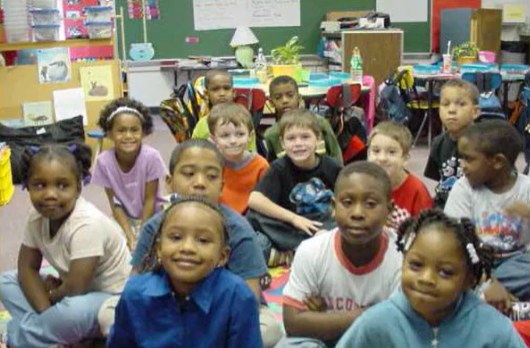
These two videos show different collections of photographs of children that illustrate various practices associated with the nine principles of Whole Schooling. You might look at each photo and see if you can identify the Whole Schooling principles evident in that photo.
Authentic Multi-level Instruction
Below you will see 9 examples from elementary classrooms where the teachers are aiming to provide multi-level instruction. What examples do you see here that are good? What questions does it raise for you?
- Three classes and multi-level teaching
- "Let's tell a story together!"
- Arts in Academics, Detroit
- Reading workshop: Reading together
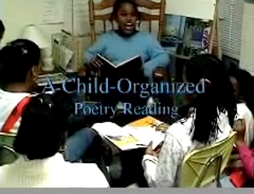
- Children organize a read-aloud of story books to one another
- Math games and a student with a cognitive disability
- Tanya teaches an inclusive bilingual 1st grade class
- Watch a read-aloud with Gina who has a very severe disability
- Sydney engages with other students as she works on her moose project
Community Building and Friendships
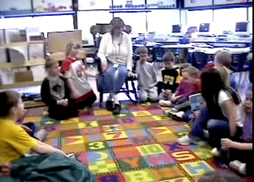
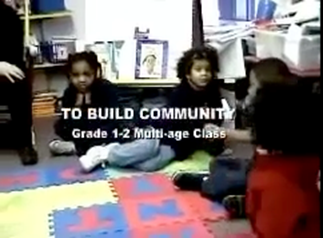
The videos you will see in this section illustrate a variety of ways that teachers seek to build community in their classrooms. It’s tempting to think, “Well building community has little to do with actually learning academic skills!” And you would be wrong. When a classroom community is built students have resources from both the teacher and other students in the class who can provide assistance.
- Having conversations with respect
- Morning meeting in first grade
- Building community in 3 elementary classrooms
- Circle of Friends Meet
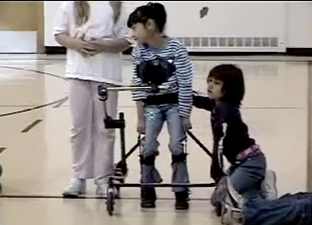
- Student with severe disability welcomed by peers
- Two students reading together
- Gym teacher talks
- Peer tutoring
- Student with disability with friends on playground
- Girls helping student
- Consultant Susanne Frank discusses friendships between high school students with and without disabilities
Conflict and behavior challenges
Here are three videos that deal with three different behavior challenges: some students doing less work than others on group projects; one potentially disruptive student in a group situation; and dealing with a fight that happened at recess. Note how each of these situations is handled in a way that strengthens rather than harms building of care and community in the classroom.
- Mishael Hittie deals with behavior challenges
- Halina and Jerome
- Dealing with a fight that happened at recess
Co-teaching 
The following videos show classroom in which co-teaching is occurring. You will see a general education and special education working collaboratively in teaching the class. We have more examples of elementary classrooms but do show both a middle and high school class. The special education teacher provides additional resources to assist students with special needs but also to provide suggestions and assistance to the general education teacher. What do you see as you watch? What questions do you have?
- Co-teaching in middle school social studies class
- Co-teaching a high school social studies class
- Small group with math games
- Speech therapist co-teaches in reading workshop
- Special education teacher co-teaching
- Support personnel talking about their role
Mishael Hittie 4th grade class
These 6 videos show one teacher using a mix of authentic, multilevel teaching, community building, co-teaching, and positive behavior support in a 4th grade class. How does she implement the nine principles of Whole Schooling? How do you see each principle interacting with others?
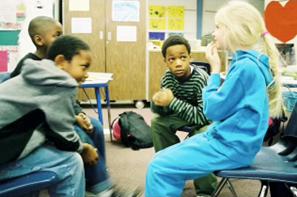
- Boy with special needs and book reading group
- Reading and writing workshop
- Community building pictures
- Reading workshop and frozen worlds
- Discussing how kids work at different ability levels; understanding US geography
- Shawnessy in 4th grade
Micah in high school
Micah Fialka-Feldman is a remarkable person. He has a cognitive disability and was fully included throughout most of his public school education. In high school teachers did a good job figuring out how to teach and adapt teaching for Micah. He had a circle of support that has continued with changes into adulthood, You can find out more about Micah HERE and can order his book Opening Doors HERE. Micah attended college, lives in Syracuse, New York where he co-teaches classes at the university regarding inclusive education and disability studies. He won a lawsuit against Oakland University when the university told him he could not live in the dorm. His mother, Janice Fialka, is a well-known speaker and writer regarding parent-professional partnerships, raising a child with disabilities, and post-secondary education. You can find out more about Janice and her books HERE. Micah is featured in a coming video by award-winning filmmaker Dan Habib. You can view a trailer of the video Intelligent Lives HERE.
(URLs for items above: Micah’s book-www.openingdoorsbymicah.com;
More about Micah - https://www.throughthesamedoor.com/; and Janice Fialka - https://www.danceofpartnership.com/; and www.youtube.com/watch?v=jjyENb2qbu0)
Getting to know Micah will be a treat for you. Below are videos of Micah in high school taken by Michael Peterson.