
Introduction to Whole Schooling
Go to any classroom in any school anywhere in the world and you will find a huge diversity of children. If you’re a teacher, you know this as you think about your students. Their personalities, interests, what sets them off and turns them on are dramatically different. Combine these amazing differences with the others that most often come to mind when we use the term ‘diversity - race, culture, country of origin, language, gender, sexual preference – and teaching well can feel daunting. 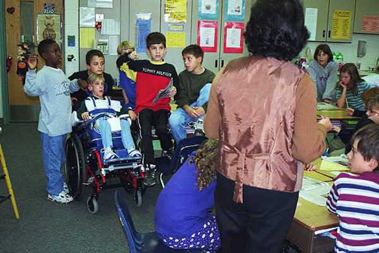 Add characteristics that impact the cognitive, social-emotional, and sensory physical abilities of children (disabilities, giftedness) and the job is even more challenging.
So what to do? How do schools and the teachers and parents of children in them deal with this wide range of diversity?
To decide what to do we need to back up and ask a fundamental question: what is the purpose of schools? Why do we have them? Whole Schooling posits that the purpose of schooling should not be a test score but to help children develop skills that maximize the opportunities they have in life and to develop active, effective citizens for democracy. Click HERE for a discussion of the purpose of schools and the foundation that allows us to consider how to improve schools and learning.
With colleagues throughout the world we have developed an approach to teaching and schooling that creates education where children with vast differences learn together well. We call this approach Whole Schooling.
To achieve this end, schools must create a culture and use a set of practices that engages children and youth in authentic problem-solving and exploration, a culture where personal best learning, care, and empowerment are central. Such schools are founded on nine principles and their associated practices. Click on each principle for a brief discussion.
Principle 1. Empower citizens for democracy
Principle 2. Create learning spaces for all.
Principle 3. Include all in learning together.
Principle 4. Build a caring community.
Principle 5. Support learning.
Principle 6. Partner with families and the community.
Principle 7. Teach all using authentic, multi-level instruction.
Principle 8. Use technology to facilitate student learning.
Principle 9. Assess students to promote learning.