
Principle 1. Empower citizens for democracy.
If we are serious about helping children become empowered citizens in a democracy, schools must involve children in sharing power and decision-making in the daily life of the classroom. Further, democracy must be an integral part of the culture of a school among adults- collaboration among staff in partnership with parents and the community.
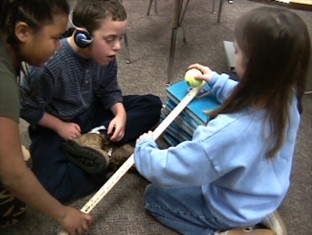
The outcome and process of good schooling and teaching.
Too often the interaction between school personnel and students and parents seems to be aimed at subverting any notion of shared power and decision-making related to schooling. In such schools students are expected to sit quietly at their desks and work, raise their hands to make simple movements in the class, in elementary school, students are marched in regulated lines from class to class; in high schools, security guards check students coming into school and periodically make sweeps and searches of lockers looking for prohibited items. A cycle of control and challenge is born that reduces dramatically learning about responsibility and citizenship, increases anger and the need of students to challenge what they see as repressive authority, and sets in place emotions and tensions that reduce learning.
In the mission statements of most school systems are goals to create thinking citizens who can make decisions and effectively engage in multiple adult roles – community leader, parent, worker. If this is so, classroom practice must systematically and explicitly provide students the opportunity to make choices, solve problems among a group, develop consensus, and deal with conflict. In such classrooms, students of great differences can all have an effective voice, students are motivated to learn as they develop a sense of ownership of a classroom community, and students are allowed and taught how to use power in their personal lives. Particularly for students with many life challenges who may have little control in their home lives, giving students power and control in the classroom can both prevent problematic behaviors and promote higher levels of learning.
Practicing democracy in the classroom
Teachers seek to empower students in the classroom by practicing democracy in the classroom. Students learn and practice civic skills by making decisions regarding learning activities, engaging in debates regarding issues, and working to address real-world problems that affect their lives.
Teachers should consider the set-up of the classroom and how it may encourage or hinder democratic learning in the classroom. Teachers may ask their students: “What should our classroom look like if we want to encourage democracy among us? Teachers may facilitate discussion regarding layout of the room. “How should we organize our classroom if we want to encourage democratic decision-making and dialogue?” Students can discuss how furniture should be arranged, and how classroom decorations should be placed. Students may consider how arranging chairs in a circle can promote more open discussions on issue. This may help teachers move away from being seen as just an authority figure and assume the role of learning facilitator. Students may also be asked how they should organize classroom discussions to promote democracy.
Teachers may involve students in making rules for the classroom. Even more interesting, students may be involved in creating a classroom charter that outlines their rights as well as responsibilities in the conduct of learning. Students may be introduced to how rights are formulated and function. They can study various charters in issues around the world.
Teachers may also facilitate discussions regarding how the classroom may have calm places where students may withdraw from interaction if needed. Students can be taught how to identify their own feelings through “I” statements: e.g. I feel angry (or hurt or embarrassed) right now. Sometimes students do need to withdraw to a calm place. Students can help design such calm places – underneath a desk, a desk pulled to the side of the classroom, in a corner of the classroom.
In classrooms that aim to teach students the processes and responsibilities of democratic action, teachers seek specific ways that students can suggest ways to make the classroom community more effective. Teachers seek to facilitate students setting learning goals and taking charge of their own learning. They help students set their own goals and performance standards.
Teachers also support students in taking responsibility for building relationships teaching them how to solve problems they have with one another. Teachers pair students together to work together and help one another engaging students in problem-solving concerning relationships. Students make choices and work in collaborative working groups in which they make decisions.
Teachers use class meetings to provide an opportunity for students to share and discuss issues and needs. Teachers work to connect students with members of other cultures, ethnic groups, and socio-economic status and study the local community.
Studying and debating local community issues
Teachers also facilitate involvement of students in local community needs and issues. Students may be asked to identify problems and issues in their communities and teachers can establish forums in which students research and debate issues. This can help students see an array of perspectives and helps in fostering critical thinking skills. In the best circumstances students could actually get engaged in the community directly and take action with an issue and need.
Similarly, students can be encouraged to get involved in local community efforts such as clean-up projects, providing help to disabled community members in caring for their house or yards. Students may organize events that highlight various cultures and ethnic group running sessions that incorporate music, dance, food and storytelling to inspire appreciation and respect for other cultures. Students may organize trips to nearby cultural sites where students visit sites, talk to people, and debrief back in the classroom regarding what they learned. Students can also be encouraged to involve themselves in dialogue regarding issues on social media sites and discuss what people are saying with other students.
Here is a very useful source that can help guide teachers in involving students in civic dialogue: Educating for American Democracy aims to create a blueprint drafted with input by some 300 scholars for students learning about the implementation of democracy in civic affairs. https://www.educatingforamericandemocracy.org
Michael Peterson, 2025
RESOURCE LINKS. Principle 1. Empower citizens for democracy.
Empower citizens for democracy in education. Search in google and see what AI tells you.
The Power of a Democratic Classroom.
Empowering Democracy: Educating an Ethical Citizenry: A collection of resources designed to support civic education and learning for higher education and high school curriculum.
The silent infrastructure of democracy: Why education matters.
Teaching for democracy alliance.
Investing in Civic Education and Our Democracy.
Teaching Civics: Schools as Incubators for Democracy | A Citizen’s Guide to Preserving Democracy.