
Principle 3. Include all in learning together.
For a democracy to function, by definition, all children must be there. For students to learn well, to be prepared to function in a diverse society, they must be exposed to people with diverse characteristics. Students learn at deeper levels when they are part of heterogeneous classrooms. Thus, we seek schools in which All children learn together across culture, eth-nicity, language, ability, gender, and age, where separate pull-out programs and ability group-ing in the classroom are used seldom if at all.
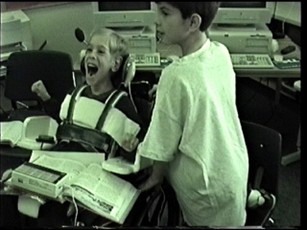
For high levels of learning to occur for all by definition all students must be there. In Whole Schooling separate schools, classes, or pull-out remedial services are not used. Rather all students learn in the same classroom together. Resources used previously for separate and pull-out schooling are used to help provide support for students and teachers in general education classes. When teachers work hard to teach in a way that services students with multiple abilities together, the learning for all improves.
For students to become effective leaders in a diverse society, schooling must provide opportunities to interact with others from diverse racial, ethnic and ability characteristics. The sense of community and social safety promoted in Whole Schooling teaching provides an emotional foundation that allows brain functioning at the highest levels, preventing the downward shifts when fear and rejection are prevalent. In Whole Schooling teachers welcome all sorts of students into their classrooms to include: students with disabilities (eg. students who have severe mental retardation, physical disabilities, multiple disabilities, and severe emotional impairments etc.); gifted and talented students; poor and at-risk students; students who are gay; and students with limited speaking abilities.
When schools commit to welcoming all students in learning together several actions occur. These actions include:
- Reaching out to parents of all children; paying particular attention to helping parents of children with special needs to know that their children are welcome and are part of the school community.
- Providing support for teachers and children in general education classes.
- Offering authentic, multilevel instruction specifically designed to engage children in meaningful activities in which they learn together at different ability levels; this may involve making adaptations and modifications in academic instruction.
- Building a community among children, staff, and parents: a community in which all feel welcome, all belong, emotional intelligence and social skills are taught, and relationships are nurtured. Part of building this community is responding proactively to the needs of children who have behavioral and emotional problems and challenges.
- Designing the physical environment of the classroom and school to promote learning and growth among children with diverse sensory and physical characteristics; adapting the environment and using assistive technology to help children learn more effectively.
- Demonstrating leadership and learning through dialogue and democratic decision making.
Here are a few examples of how quality teaching may work with a variety of students with various special needs:
- A student of the highest ability works on a project involving a study of the polar ice caps in a small group that includes a student with severe mental retardation. Each of the students contributes to the total project at their own ability level; each is benefiting based on individual needs.
- A student who uses a wheelchair partners in science lab with a student who has immigrated recently from another country.
- A child who is blind intrigues his classmates with talking software on his laptop. A student who is deaf is aided by a signing interpreter; ninety students join the “Sign Language Club,” and the music teacher incorporates sign language into school musical productions.
- Students with social and emotional problems get help and support from a staff committed to helping them learn social skills, develop relationships, and know they are cared for and belong.
- Circles of support meet for different types of students throughout the school—one for a little boy who does not understand English, another for a child who just lost both parents in a car accident, another for a child who was abused in the past and has many emotional and behavioral problems.
Let’s discuss strategies to use with various types of students.
Students from Diverse Races and Cultures
Since the 1950’s, schools have not been allowed to segregate students on the basis of race, culture, or gender. The Supreme Court of the United States stated that schools that are racially segregated can never be equal in the 1954 Brown vs Board of Education ruling. However, after some movement towards racial integration following this landmark case, racial segregation of schools has again increased in recent years. Academic achievement of students is directly related to racial segregation.
Here are some key strategies for teaching students across diverse races and cultures:
- Use a range of strategies to get to know students and their backgrounds: Eg. writing assignments regarding their background and culture; have students share correct pronunciation of their names; have students create visual representations of their family and culture.
- Encourage student’s drawing on their experience to contribute to learning projects.
- Insure that books and other learning materials include materials that focus on diverse cultures and experiences.
- Meet parents and ask them questions about their culture and background.
- Use materials (books, music, art, etc.) from different cultures and biographies and stories of people from diverse backgrounds.
- Create opportunities where students may draw on their experiences becoming the expert to explain things to the class.
- Use authentic multi-level instruction including projects, storytelling, and music to connect with different student learning styles.
- Help students to understand and build on their strengths fostering a mind-set focussed on growth.
- Invite guest speakers to your class that represent different cultures and ethnic groups
Dominant Language Learners
Students who do not speak the dominant language often are segregated many times over serving to increase their isolation. Such second language learners are often from poor families and attend schools with high percentages of low income students. These schools are often racially segregated as well. There are tensions between the need to include students who are second language learners with the peers in school and the need to provide the most effective means of learning a second language and learning academic content. These students need to learn to use the dominant language where their culture is also honored. Programs that combine using the native language with learning in the dominant language are seen as effective.
Students need to be integrated and educated with students who are fluent in the dominant language. Such inclusive educational approaches ensure that students develop relationships with others and feel a sense of belonging in the school that helps prevent social and emotional difficulties. Additionally, social integration with dominant language speakers provides fluent role models in the use of language and does help students learn and apply language in ways that is not possible in a separate classroom.
Teachers need to ‘shelter’ language demands using additional cues such as graphics, gestures, and pictures to enhance understanding and communication and reduce the demand on language alone. Instruction should also incorporate authentic learning that calls on higher cognitive abilities, engage student interest, offer student-directed activities, and make connections between school and home. Here are some key strategies for teaching students who are learning English as a second language:
- Get to know the student’s culture and background, interests, and strengths.
- Encourage students to become aware of their cultural experiences valuing such sharing in the classroom.
- Use additional ways to convey meaning in addition to language like graphic organizers, graphic illustrations, body language and gestures, videos, etc.
- Use authentic multi-level instruction including projects, storytelling, and music to connect with different student learning styles.
- Give students many opportunities to use language at their own level in group work.
- Seek to help students build supportive relationships with classmates who can provide language help while working on collaborative projects.
- Integrate language learning into all projects in the curriculum.
- Speak slowly and seek to simplify language when giving instructions.
- Collaborate with English as Second Language (ESL) specialist who can provide support for your language learning students and give you strategies to use in the classroom
Students who are gifted and talented
Much debate has occurred regarding whether students considered gifted and talented should be in separate programs or whether general education teachers should be trained to provide differentiated instruction to provide effective instruction for these students. The removal of high-achieving classmates takes away role models whose work may strengthen learning for other students. Further, highly able students often feel isolated and cut off from their friends. If teachers use multilevel, differentiated instruction segregated programs for students who are gifted would be unnecessary. Authentic, multilevel instruction provides a way to challenge all students at their ability level, including students considered gifted and talented.
Dr. Ellissa Brown has a few “do nots” related to gifted students (https://www.edutopia.org/blog/gifted-students-general-ed-classrooms-elissa-brown):
- Use gifted students as teacher assistants.
- Expect gifted students to be well behaved.
- Give them more work because they finish early.
- Isolate them to work independently without oversight.
- Expect a gifted child to be gifted in every subject
Here are some key strategies for teaching students who are considered gifted or talented:
- Figure out areas in which the student is and is not gifted.
- Key here is using authentic, multi-level instruction where students may engage an interesting, open-ended topic where they can pursue higher levels of learning. By definition this will allow able students to engage topics at deep levels.
- Allow students who have mastered information being pursued by other students to take on different topics or more in-depth exploration of a given topic.
- Create opportunities for gifted and talented students to guide and help learning of other students. The goal is to gain leadership and mentorship experiences and understanding.
- Provide opportunities for students to explore topics of their own interests.
- Give opportunities for gifted students to work together periodically.
- Seek to challenge gifted and talented students to engage in complex topics of interest and use their skills and knowledge to benefit other students.
- Curriculum compacting: Pre-assess students to avoid teaching what they already know, and allow advanced students to pursue enrichment activities or explore units in additional breadth or depth.
- Tiered lessons: Structure lessons that allow students to move ahead as they are able and interested. Provide a range of activities students may select from at various levels of difficulty. Allow and teach students to choose their own activities at their own level.
- Open-ended assignments: Give assignments in which students can explore complexity, assignments that have open-ended rather than finite responses. Instead of saying, “Read this and answer the multiple-choice questions,” we would say, “Read and write about how Columbus came to America.”
Students Who Are Homosexual
Despite much prejudice and poor treatment of these students, students who consider themselves homosexual have not been segregated in public schools. Negative, hostile treatment of students who are gay impacts them in many problematic ways. Teachers can help promote acceptance of students who are gay. Let’s briefly explore how this may work.
- Allow and encourage students to use the pronouns that refer to their chosen identity.
- Decorate space with items that share being allied with LGBTQ people.
- Include LGBTQ perspectives in lessons. Explore LGBTQ experiences and issues.
- Engage students who seek to bully; stand up for those being bullied; utilize positive behavior support strategies to affirmatively deal with bullying.
- Have something gay-related visible in your office that will identify you as a safe person to talk to.
- Do not advise youth to “come out.” This is their decision to deal with in their own time.
- Listen to students; encourage sharing of their experiences.
Students from extreme poverty
Perhaps one of the biggest challenges in building inclusive schools is teaching students who are extremely poor. By and large, parents and students who are very poor are judged and punished for their poverty and difficulties. The stereotype is that poor people are lazy, make bad choices, and are not motivated or intelligent. Many factors come together to make it very difficult, though possible, for children who are poor to improve their lot in life. What’s also clear, however, is that teachers have the potential to help break this cycle. Here are some strategies that may be helpful:
- Show and tell students that they are special.
- Make extra efforts to ensure understanding of the material being covered.
- Ensure that the school and the classroom are safe, both emotionally and physically. Protect students from ridicule.
- Address social class as part of the curriculum and fight classism. Create learning opportunities for exploring structural causes of poverty.
- Examine our own attitudes related to people from generational poverty. Seek to understand and learn. Visit the children where they live, whether the back of a truck or in a homeless shelter. Talk to the parents about their concerns.
- Connect students with mentors.
Students with disabilities
Being included in general education classes is particularly important for students with a range of disabilities. Some have thought segregated special education classes with smaller class sizes and additional adult resources would allow teachers to individualize instruction and focus on the learning styles and needs of each student, thus leading to improved learning. However, this has not occurred. However the reality is very different. Teachers have been found to teach mostly through whole class instruction. They gave the same level of reading materials to students at obviously different levels of ability, used basals as the primary source of reading material, and used very little individualized, small group, or differentiated instruction.
Many people have expected that instruction in a general education class using authentic, multi-level teacher and modeling by more able peers would enhance learning. With few exceptions, the research strongly supports these expectations. Look at the chart below to see research findings showing that inclusion in general education classes is more effective contrasted with studies that showed mixed results. Note that there is no research has indicated that separate special education classes are more effective.
The term “students with disabilities” covers a range of conditions. Let’s briefly look at strategies that can be used with students with different disabilities.
Strategies for Students with Differing Academic Abilities
Following are key strategies for students with different academic abilities (learning disabilities; cognitive disabilities). While it’s helpful to think of strategies associated with each specific group it’s even more helpful to think about strategies to design instruction to accommodate students with various academic abilities. Strategies include:
- Have positive, high, but reasonable expectations coupled with emotional support.
- Expect all students, especially those with higher abilities, to play leadership roles in class discussions, sharing their learning and extending issues to higher levels of complexity.
- Have reading and instructional materials available that are high interest but are at wide ranging levels of ability, picture books to highly technical materials on a particular subject, for example.
- Use multi-level, differentiated instruction to allow students to function at varying levels of ability in lessons. Expect performance that fits the ability level of each student. (See Chapters 11-13).
- Use authentic and activity-based learning linking various subjects around key themes that are important and interesting to students
- Identify and draw on the strengths of students (rather than emphasizing deficits). Use multiple intelligences to find areas of strength.
- Reduce stress and pressure concerning areas of student deficit by using authentic, multilevel teaching and celebrating their successes and growth.
- Provide scaffolds and supports to help students be able to participate in more complex activities than they could do alone and to challenge and support all students in learning at their own level.
- Help all students organize their materials and monitor their scheduling and completion of learning activities.
- Mix groups heterogeneously giving all students opportunities to support other students in their learning, rather than just asking high ability students to do this. Remember that teaching someone else deepens understanding.
- Help students connect with one another and develop relationships. Avoid stable ability grouping.
- Work collaboratively with other teachers and specialists, such as special education teachers, gifted specialists, speech therapists, psychologists, social workers, and others to design lessons that meet the needs of all students and to provide in-class support to students in learning.
- Resist the temptation to send students out to special education resources rooms, gifted classes, or other separate programs when it is difficult to figure out how to use multilevel, differentiated instruction.
Students with Behavioral and Emotional Challenges
Working with students with emotional and behavioral issues will often challenge teachers. Students may have a range of labels that include: attention deficit/hyperactivity disorder (ADHD); serious emotional disturbance; and autism spectrum disorder. Treatment of students with emotional disturbances sometimes seems designed to exacerbate their problems. These students need more security, more trust, more love. However, these students are most often (1) separated and isolated from other students, (2) punished, and (3) medicated. Following are strategies for students with challenging behaviors:
- Most importantly we must commit ourselves to engaging, supporting, guiding, teaching students with emotional and behavioral challenges .
- Teach with creative and engaging activities helps provide a positive, meaningful school experience.
- Provide options and choices that respond to individual needs and learning styles. These include varied places to work (table, desk, floor, in the hall), places to be alone and comfortable (cushions, headphone, underneath the teachers desk), varied lighting, etc.
- Provide positive outlets for student energy--opportunities for movement and creative expression.
- Help all students organize their materials and monitor their scheduling and completion of learning activities.
- Develop class structures for emotional support through circles of support, peer partnerships, class meetings.
- Develop predictable class routines and help students understand changes that may occur.
- Form a personal relationship with students.
- Build community and provide emotional support letting students know we are available to help.
- Help develop a place for supervised support where students can go to cool-off, obtain academic assistance, or problem-solve with an adult.
- Integrate social skills learning into all academic lessons on a moment-by-moment basis. Use a range of strategies to help students learn needed social skills including social stories that help a student rehearse behavior in a difficult situation and picture schedules.
- Help students understand their own needs and proactive ways to have those needs met .
- For students with seriously challenging behaviors work with an interdisciplinary team to develop an intensive behavioral support plan.
- Use professional supports and services such as individual and group counseling, consultation with a psychologist of social worker, and support groups for students and families.
- Facilitate support for ourselves via informal and formal consultation with other teachers, behavior specialists, and other professionals.
Students with Differing Communication, Physical, and Sensory Abilities
Students also come to us with a wide range of disabilities that are based in physical functioning. These include communication, hearing, seeing, physical movement, and health and well-being. Some children have severe disabilities that impact many areas--academic and physical abilities, adaptive skills, cognitive functioning. The bodies--arms, legs, face, trunk--of many of these students are shaped very differently from those of other children, resulting in an appearance that seems disfigured to many people. Some have a communication disorder that may include stuttering, impaired articulation, a language impairment, or a voice impairment, that adversely affects a child’s educational performance. Students who are deaf cannot use their hearing to understand speech, even with amplification. Students who are hearing impaired have a loss of hearing but they can often understand speech. Other students may have a “visual impairment including blindness means an impairment in vision that, even with correction, adversely affects a child’s educational performance”[IDEA], 2004, section 300.7). Students may have physical and other health impairments (POHI) which may include a range of conditions including cerebral palsy. Yet other students may have conditions that are called other health impairments due to chronic or acute health problems such as asthma, attention deficit disorder or attention deficit hyperactivity disorder, diabetes, epilepsy, a heart condition, and more. Students with these varied conditions require many specific strategies. Most often these students will have specialists who provide specific services and can help teachers know strategies they can use.
Michael Peterson, 2025
RESOURCE LINKS: Principle 3. Include all in learning together.
Inclusion: Learning Together: Early Childhood Insight
Universal Design for Learning: Center for Teaching Innovation
Cooperative Learning in Inclusive Classrooms: Students Who Work Together, Learn Together
Including gifted and talented students in general education. (Search in Google and see what AI tells you.)
Serving Gifted Students in General Ed Classrooms
Gifted Enrichment Tips for the General Education Classroom
10 Strategies That Support English Language Learners Across All Subjects
Integrating ELL Students in General Education Classes
3 Ways Gen Ed Teachers Can Support Students with Disabilities
How to Include Students with Disabilities in General Education in 4 Easy Steps
Students with Significant Cognitive Disabilities: Supports in the General Education Classroom
Including Students with Multiple/Severe Disabilities in the General Education Classroom
Deaf and Hard of Hearing Students in the Classroom (VIDEO)
Accommodating Deaf and Hard of Hearing Students in Schools
Inclusive Teaching: Deaf and Hard of Hearing
Creating Inclusive Classrooms for Blind Students Can Benefit Everyone – Here’s How