
Principle 5. Support learning.
Support in learning is needed by teachers and children alike. Schools use specialized school and community resources (special education, title I, gifted education) to strengthen the general education classroom. Support personnel collaborate with the general education instructor to include children with special needs in classroom activities and to design effective instruction for all students. They avoid ability grouping or teaching children at the back or side of the room. All struggle to provide proactive support to meet needs of students with behavioral challenges.
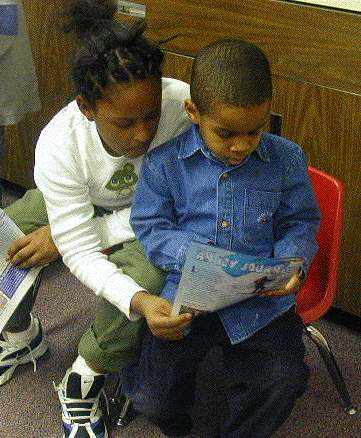
COLLABORATION AND SUPPORT FOR LEARNING:
Strengthening the middle and avoiding the tragedy of the commons.
If schools are to be successful, a professional community of support among teachers is necessary as well. In a school committed to high levels of learning for all students, specialists and support staff develop an effective, collaborative, trans-disciplinary support system for teachers, students, and families. Such schools use specialized school and community resources (special education, title I, gifted education) to strengthen the general education classroom, developing support teams to assist with academic, social, and medical needs.
Supporting teachers in working with students at multiple ability levels, who have emotional and social challenges in their lives is critical. This is particularly important as the shift towards teaching very diverse students together. Teachers who are used to trying to teach at only one level have difficulty figuring out how to teach at multiple levels. Even teachers who do this well sometimes don’t know that they do or what is multi-level and what is not.
A range of specialists are available to most schools to deal with special needs and problems of children – social workers, special education teachers, bilingual teachers, psychologists, nurses, occupational therapists, speech therapists, and others. In a traditional school, most of these people work on their own with limited consultation with others and pull children out of class for various services. Special education teachers and other specialists such as gifted consultants, speech therapists, physical therapists and others, play an important role. Specialists work as a team to support general education classroom teachers in the school.
Four roles exist related to in-class support by teachers and aides.
- Remediation or enrichment – the goal is to ‘fix’ the child or ‘enrich’ the child’s experience, often in pull-out classes or one on one work in the back of the general education class.
- Adapting – teaching strategies are not questioned and if the ability of the child does not match requirements, curriculum adaptations are developed – e.g. different worksheets, less work, more time to do work.
- Inclusive, multi-level, authentic teaching. Here the support teacher and general education teacher work together to design lessons that engage children at multiple levels.
- Teacher need. In this situation, a support teacher provides assistance to the teacher in strengthening or areas of relative need in the teacher’s repertoire. This might include helping the teacher to learn skills in literacy, science by developing a lesson and teaching it.
In quality schools, we put our focus on #’s 3 and 4 -multilevel teaching. Pull-out remediation has little place. Adapting (#2) will be needed less as teachers learn how to teach starting from children’s present abilities and strengths. In this way of working we might see:
- The support team meeting weekly together to talk about children with special problems and needs and brainstorm together how to deal with the issue.
- Scheduled meetings at least every two weeks between the general education teacher and the specialists who are providing support in the classroom to develop plans on teaching together and address concerns of specific children.
- Special education teachers assigned to several rooms where they collaborate with teachers. When we observe the room we would see the teacher or aide working with all the students in the class while assuring that the students with special needs were receiving the help they need. The special education and general education teacher would work together with each taking responsibility for all students.
General education teacher along with specialists – special education teacher, aide, speech therapist, social worker – work together with small groups of children who are working on different projects – centers, inquiry projects, and more.
Michael Peterson, 2005
RESOURCE LINKS: Principle 5. Support learning.
Improving Collaboration Between Special Education and General Education Teachers.
Six Approaches to Co-Teaching.
Co-teaching Strategies That Work.
Why Co-Teaching Matters: A Path to Excellence for Every Student.
How Speech and Language Pathologists and Teachers Can Collaborate Effectively.
How To Do Push In Speech Therapy.
Emerging Speech and Language Pathologists: Merging into the Classroom.
Peer Support in Inclusive Settings.